
Sex Offender Checks in Hancock County
The official starting point is the West Virginia Sex Offender Registry, managed by the West Virginia State Police under Chapter 15, Article 12. It covers public information that state law authorizes for qualifying registrants. The county does not maintain a separate public registry or local offender map. Registration itself is routed through the WVSP detachment responsible for Hancock County, while public searches remain in the state system.
The official portal shows the map and location tools used for a Hancock County sex offender search.
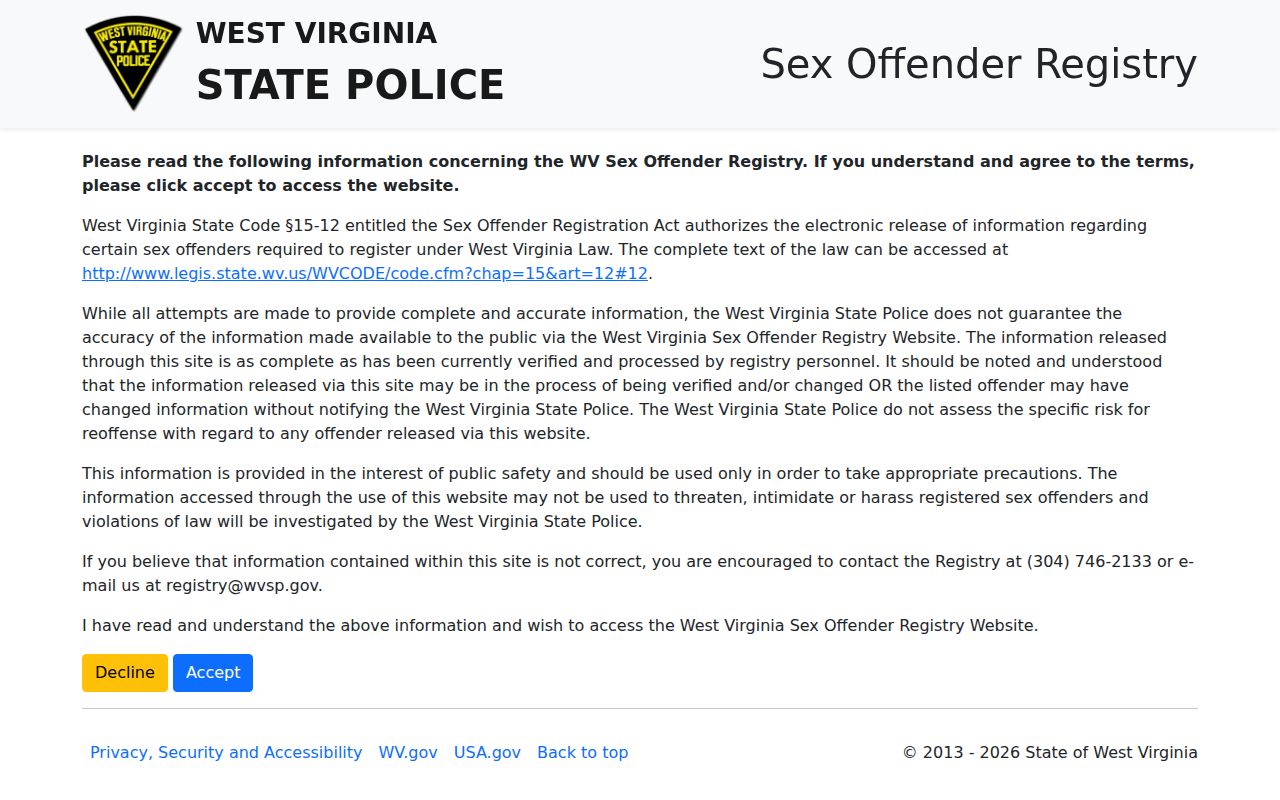
The map is a search aid, not proof that a listed person is at a pin now. Match the photograph, physical description, offense jurisdiction, and update context before treating a result as the correct record.
Hancock County Registry Disclaimer
Entry to the public system is gated by the WVSP registry disclaimer. A visitor must choose Accept or Decline. WVSP says it works to keep data complete and accurate but cannot guarantee it. A registrant may have moved or changed other required information without reporting it, and an address may still be under verification.
The disclaimer page explains why a Hancock County registry result needs source verification.
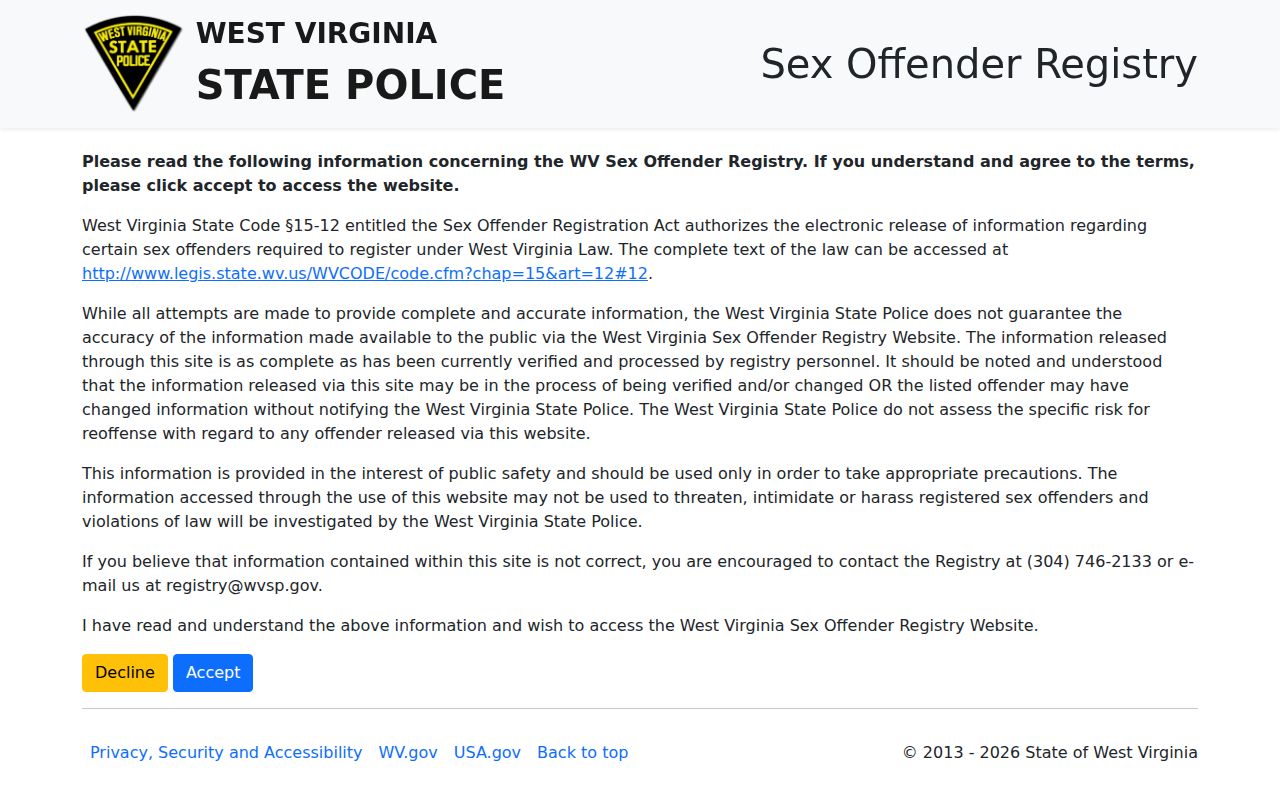
WVSP also says it does not assign a specific reoffense risk to anyone on the registry. The public profile must not be converted into a risk score or claim about current conduct.
How to Search the West Virginia Sex Offender Registry
A search can start with a name or with a Hancock County location. The session-gated interface can change, so field requirements are stated conservatively. Exact radius choices were not available in the official crawl and should not be guessed.
- Open the WVSP registry, read its limits, and select Accept to enter.
- Choose a name or location route. Use Hancock in the county field for county-focused results.
- Compare the photograph and physical identifiers instead of relying on a name alone.
- Open the profile and read the offense, jurisdiction, duration, and verification details together.
| Field or control | Type | Required | Use and limits |
|---|---|---|---|
| Accept / Decline | Buttons | One choice | Accept enters the registry; Decline exits. |
| Last Name | Text | Unspecified | Start a name search with a known surname. |
| First Name | Text | Unspecified | Narrows a name search when known. |
| County | Dropdown | Unspecified | Select Hancock for county results. |
| City / ZIP Code | Text or dropdown | Unspecified | Narrows the location search. |
| Street / Address | Text | Unspecified | Supports an address or proximity search where enabled. |
| Radius | Dropdown | Unspecified | Exact choices were not verified, so no distances are assumed. |
| Search / Reset | Controls | No | Runs or clears the chosen criteria. |
Hancock County Cross-Border Search
Hancock County lies along the Ohio River at West Virginia's northern tip, close to both Ohio and Pennsylvania. A county-only filter does not gather the public registries of neighboring states. The National Sex Offender Public Website, operated by the U.S. Department of Justice, is the useful second layer because it federates searches across participating jurisdictions.
The national search interface shows the cross-state access point used beyond Hancock County's registry boundary.
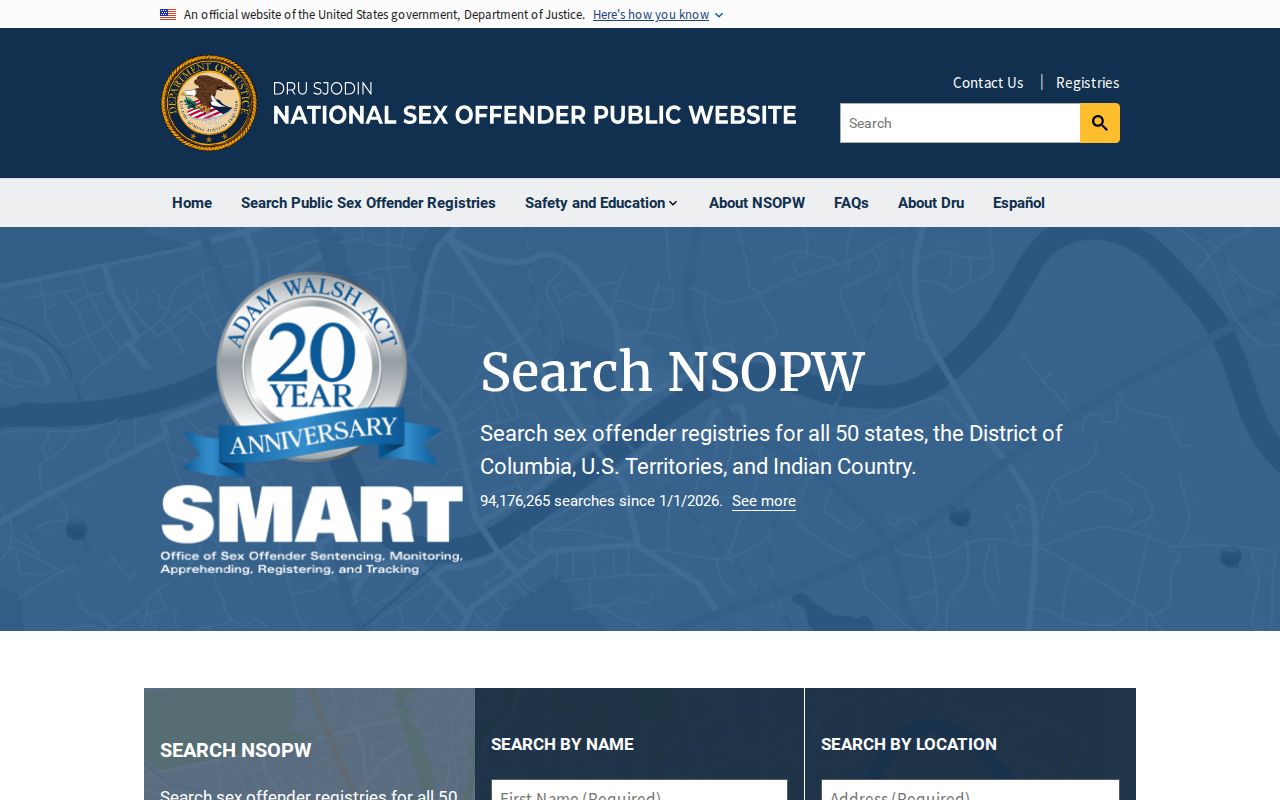
National results still lead back to the participating jurisdiction's record. Read that source registry's terms and verify the profile there rather than treating the national match as a final local finding.
Inside a Registry Profile
A public profile summarizes registration information authorized by West Virginia law. It is distinct from the underlying criminal court file. Victim identities are not public profile fields, and the research inventory did not retain any private registrant's name or address.
| Name and aliases | The identifying name and reported aliases used to distinguish records. |
|---|---|
| Photo and description | A photograph, physical description, and identifiers supplied under §15-12-2. |
| Public locations | Residence and other location information that §15-12-5 authorizes for display. |
| Offense information | The qualifying offense description, conviction, and jurisdiction context. |
| Category and duration | Ten-year or lifetime registration and a sexually violent predator designation when applicable. |
| Verification context | Compliance, reporting, and registry update details shown by the official system. |
| Other identifiers | Vehicles, schools or occupations, online identifiers, and scars, marks, or tattoos when collected and lawfully displayed. |
A registry profile does not reproduce every motion, appeal, sentence event, or later order. When procedural history matters, compare it with Hancock County criminal court case records.
Hancock County Registry Verification
West Virginia law routes registration to the WVSP detachment responsible for the county rather than to a Hancock County Sheriff registry office. The WVSP New Cumberland Detachment can be reached at 304-564-3854. A registrant reporting a required change, or a resident reporting apparent noncompliance, should call first to confirm the correct location and hours.
The local and statewide contacts serve different needs. The detachment handles registration, required changes, and local verification, while the Registry Unit handles suspected errors in published data. Hancock County Sheriff and tip411 can receive safety information, but neither one edits registry profiles. That division of work matters when time is short: send the concern to the office that can act on it instead of treating every law-enforcement contact as the database custodian.
The official verification requirements in §15-12-10 show the reporting schedule behind a Hancock County profile.
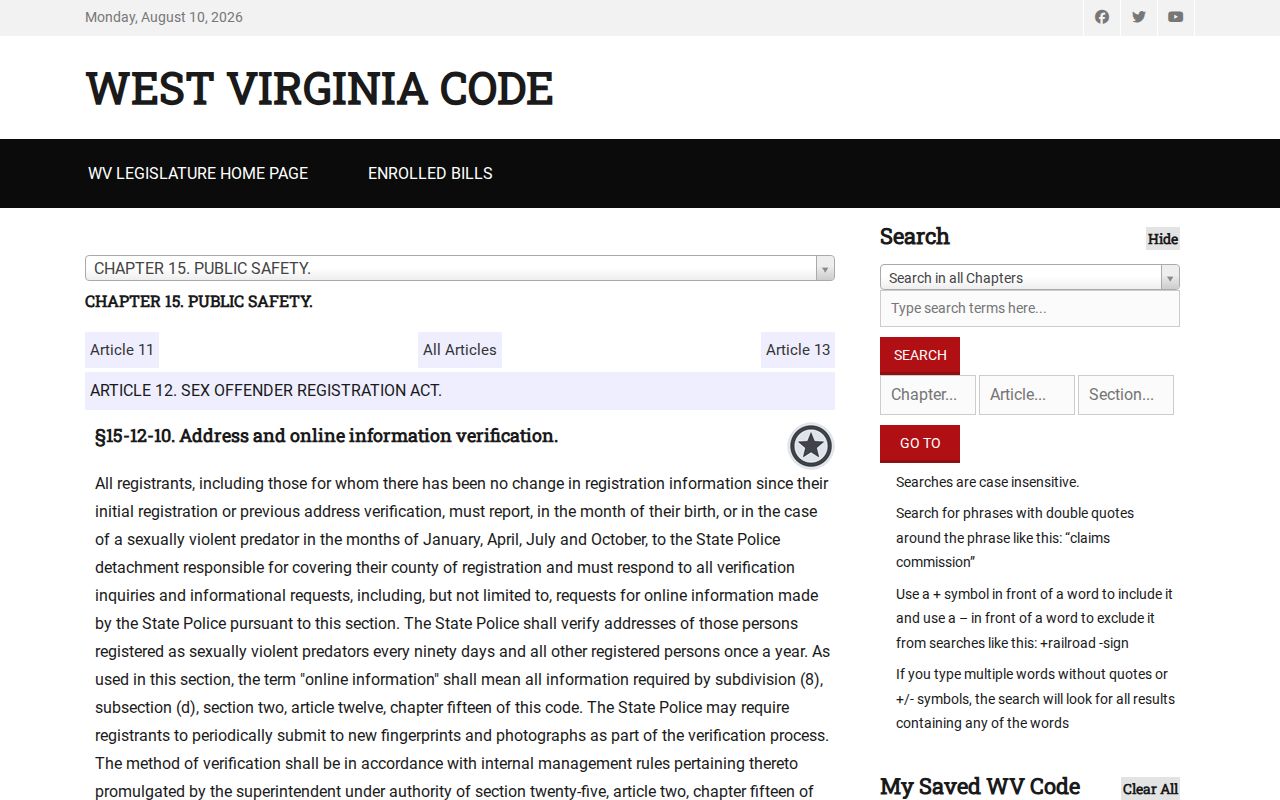
Possible data errors go to the WVSP Registry Unit at 304-746-2133 or registry@wvsp.gov. The sheriff's tip411 service can receive public-safety tips but is not the statutory database or registration channel.
West Virginia Registration Levels and Requirements
West Virginia uses statutory ten-year and lifetime categories. It does not publish a generic Tier I, Tier II, or Tier III risk chart, so federal SORNA tiers should not be inserted into a Hancock County sex offender search.
| State category | Duration | Reporting and verification |
|---|---|---|
| Registrant outside lifetime criteria | Ten years after the statutory start point | Reports in the birth month; WVSP verifies the address annually. |
| Lifetime category under §15-12-4(a)(2) | Life when listed statutory conditions apply | Generally birth-month reporting and annual address verification unless the person is also designated a sexually violent predator. |
| Sexually violent predator | Life | Reports in January, April, July, and October; WVSP verifies the address every 90 days. |
| Conviction overturned | Removal after a successful court petition under §15-12-4(b) | A court order is required; a complaint to the portal does not remove the entry. |
The duration law in §15-12-4 is the source for the ten-year and lifetime split.
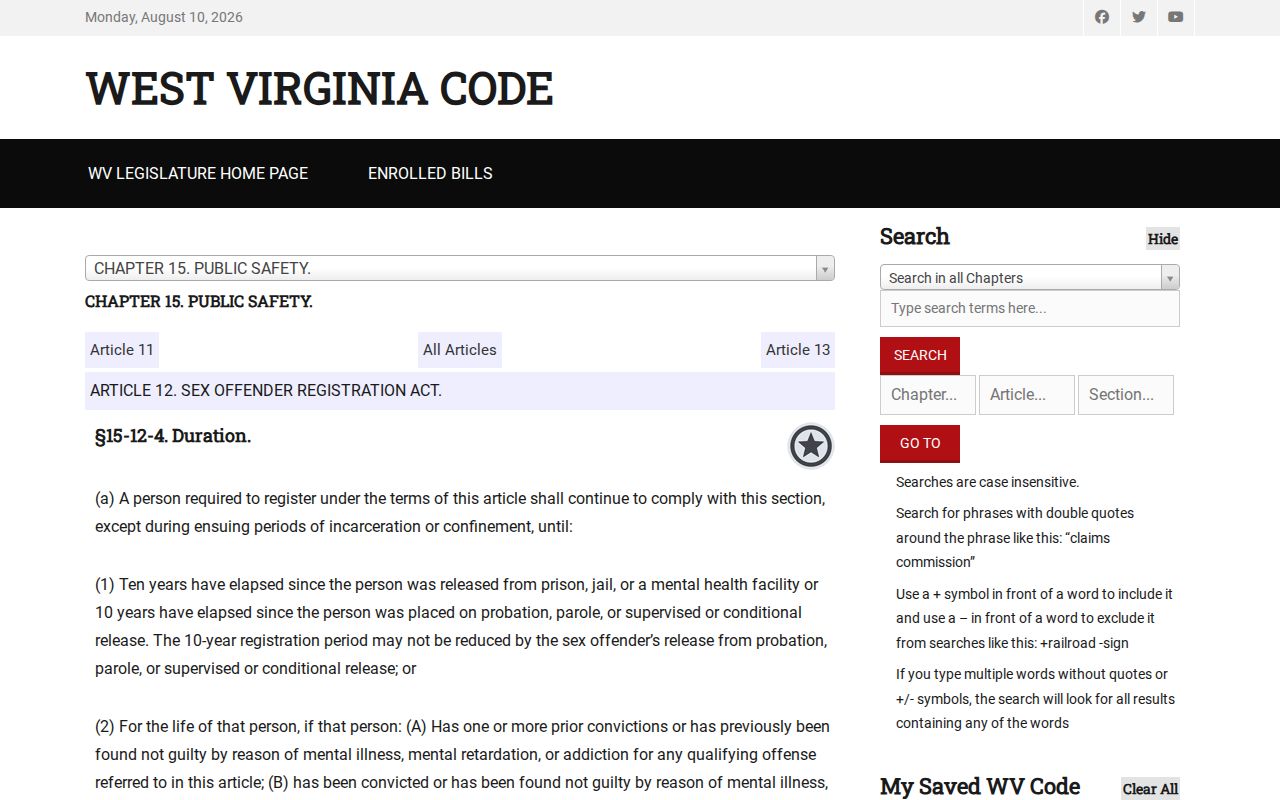
Changes in residence, occupation, employment, vehicles, school or training, and other required information generally must be reported within ten business days under §15-12-3.
Hancock County Registry Accuracy
If a map pin or address seems wrong, do not visit the location or confront anyone. Save the public record context and report the concern to the Registry Unit. If the issue is suspected failure to register or report a change, contact the WVSP New Cumberland Detachment. Immediate danger belongs with 911.
No official West Virginia registry email proximity-alert subscription was confirmed in the reviewed sources. A person seeking ongoing awareness can revisit the state registry or NSOPW and follow official local notifications, but should not expect an automated Hancock County email alert that has not been documented.
For a subject-only federal identity history, the FBI electronic ordering portal is a different official service.
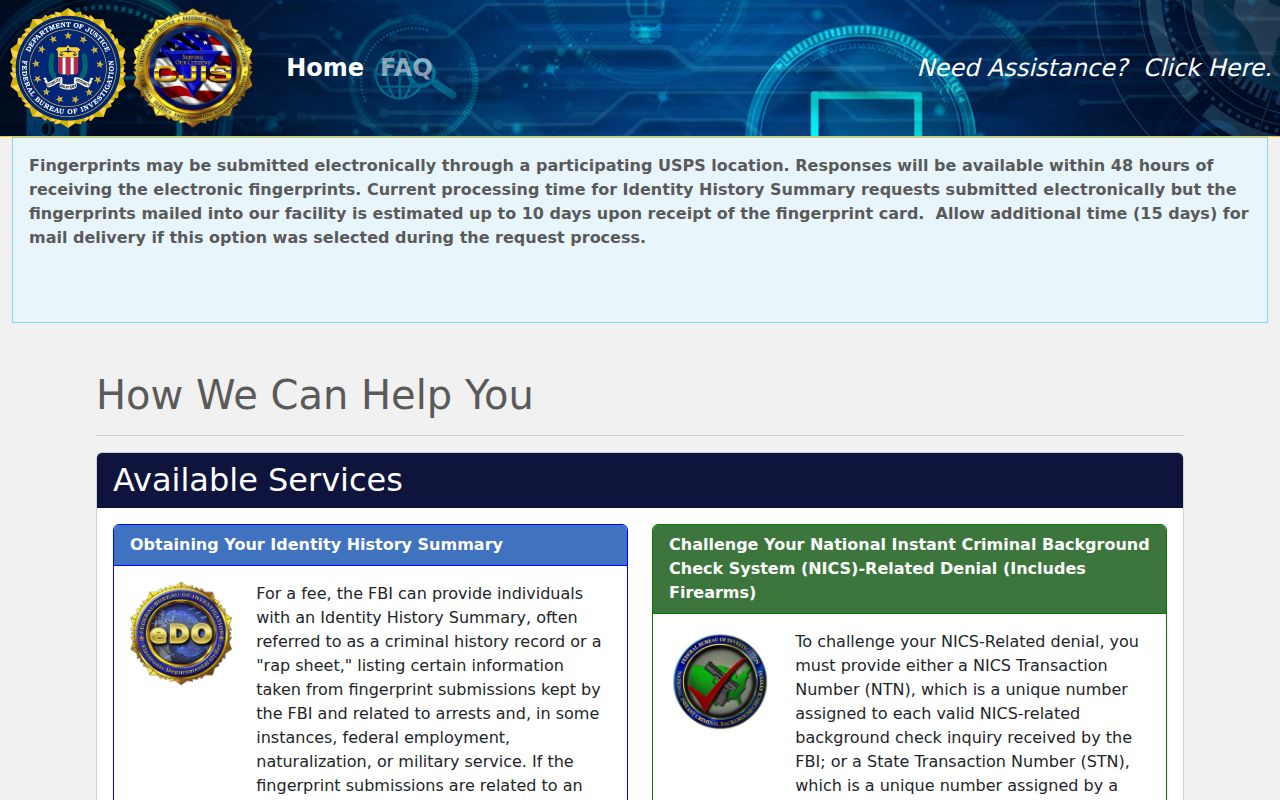
An FBI Identity History Summary is not a substitute for the public registry. It is a fingerprint-based self-record channel and serves a different purpose from community registry access.
Hancock County Registry Distance Rules
The reviewed statewide registry provisions govern registration and public disclosure, but they do not establish a simple universal distance rule that can be repeated for every school, park, or child-care setting. No official Hancock County residency-distance rule was located in the research. A sentence or supervision order may impose conditions on one person, but that does not create a countywide rule.
This distinction prevents a registry search from being paired with a restriction that West Virginia or Hancock County has not verified. Questions about an individual court order belong with the court file or the responsible supervision authority.
Community Notification and Lawful Use
The purpose stated in W. Va. Code §15-12-1a is public protection through information and precaution, not added punishment. Section 15-12-5 governs authorized disclosure and community information programs by prosecutors and WVSP. Use a Hancock County sex offender search for personal safety planning and community awareness, while preserving the official warnings attached to the data.
Public disclosure is based on the offense and statutory rules, not an individual prediction created by WVSP. If the goal is to understand why a registration duty arose, use the profile for its qualifying offense and jurisdiction, then consult the originating court record for the case history. This keeps community-notification data in its proper role and avoids reading a short profile as a complete account of the prosecution.
Registry misuse warning: The WVSP disclaimer forbids using registry information to threaten, intimidate, or harass. Conduct based on registry data may be a crime; §15-12-1a defines the law's protective purpose. Report concerns to law enforcement and never confront a listed person.
A search result is not evidence of a new offense, current presence, or future risk. Confirm each record with WVSP, use the state police contacts for corrections or suspected noncompliance, and call 911 only when there is an emergency.